WordPress powers around 40% of the internet. If you’ve ever looked into getting a website, someone’s probably suggested it.
And for good reason. WordPress is flexible, powerful, and technically free to install. If you’re a developer or someone who enjoys building things online, it’s a genuinely impressive platform.
But for a local business owner who just wants a professional website that brings in customers? That’s where things start to get complicated.
What WordPress actually means in practice
There’s an important distinction most people miss. WordPress.com (the hosted version) and WordPress.org (the self-hosted version) are very different things.
WordPress.com is more like a website builder. Simpler but limited. Once you want a custom domain, decent features, and no WordPress branding, you’re paying £25-45/month for premium plans. At that point it starts feeling less “free” than the ads suggest.
WordPress.org is the full, self-hosted version and the one most people mean when they say “WordPress.” It’s genuinely powerful. But “self-hosted” means you’re responsible for everything.
Let’s talk about what “everything” actually involves.
The hidden work behind a WordPress site
Hosting
You need to find and pay for web hosting separately. Cheap hosting at £3-5/month exists, but it’s slow and unreliable. Decent hosting that won’t frustrate your visitors runs more like £15-30/month. And you’ll need to manage it yourself or pay someone to do it.
Updates
WordPress needs regular updates. The core software, your theme, and every plugin you’ve installed. Skip updates and you risk security vulnerabilities, broken features, or both.
Most business owners end up in one of two situations: they update everything regularly and occasionally something breaks, or they ignore updates for months and end up with an outdated, insecure site. Neither is ideal.
Plugins
WordPress relies heavily on plugins for basic functionality. Contact forms, SEO, security, caching, image compression, backups. Each one adds complexity.
The average WordPress site runs 20-30 plugins. Each one needs updating, can conflict with others, and might stop being maintained at any point. When a plugin breaks or gets abandoned, you’re left scrambling for a replacement and hoping nothing else breaks in the process.
Security
WordPress is the most targeted platform on the internet, partly because it’s so popular and partly because so many sites run outdated plugins with known vulnerabilities. You’ll need a security plugin, regular backups, strong passwords, and ideally a firewall.
That’s a lot of ongoing responsibility for someone who just wants a website for their plumbing business.
Speed
Out of the box, WordPress isn’t particularly fast. Getting decent performance means choosing good hosting, installing caching plugins, optimising images, and sometimes hiring a developer to clean things up.
Page speed directly affects your Google rankings and your bounce rate, so this isn’t just a nice-to-have. It’s the kind of thing that quietly costs you customers without you realising.
Design
WordPress themes give you a starting point, but customising them to look like your actual business takes more effort than you’d think. Premium themes cost £40-80 and still need significant tweaking. And if your theme stops being updated (which happens more often than you’d expect), you’ll eventually need to switch, which often means rebuilding large parts of the site.
When WordPress genuinely makes sense
Let’s be fair. WordPress is the right choice in some situations.
If you need a large, complex site with custom functionality, WordPress gives you the flexibility to build almost anything. If you’re running a content-heavy site with hundreds of blog posts and multiple authors, its content management is hard to beat. If you have a developer on hand or you are one, WordPress is a powerful tool.
But most local businesses don’t need any of that. A professional-looking site with a few pages about their services, a gallery of their work, a contact form, and the ability to show up on Google. For that, WordPress is overkill, and it comes with maintenance baggage that doesn’t go away.
The managed alternative
This is where the landscape has shifted in recent years. More and more businesses, especially local ones, are moving away from DIY platforms like WordPress and toward managed website services.
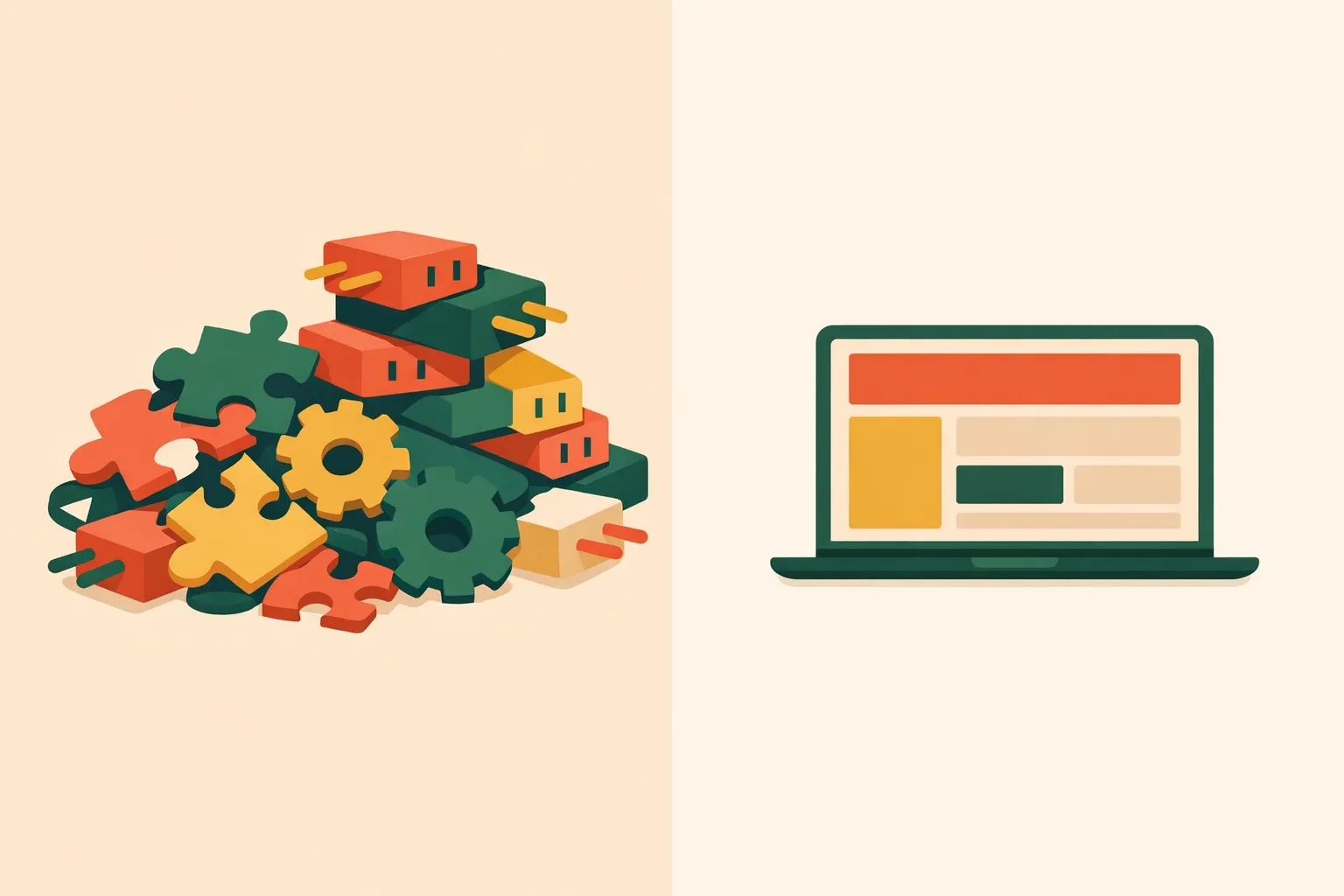
The idea is straightforward. Instead of building and maintaining a website yourself (or paying someone to build one on WordPress that you then have to maintain), a managed service handles the lot. Design, hosting, updates, security, speed, SEO. All included, all taken care of.
At Bink, this is exactly what we set out to build. Local businesses deserve better than being stuck between expensive agencies, unreliable freelancers, and DIY platforms that eat up their time. So we built something specifically for them.
Here’s what that looks like in practice.
No hosting to worry about. Your site runs on modern infrastructure that’s fast by default. No shopping around for hosting providers or worrying about server configurations.
No plugins to update. Everything your site needs is built in from the start. Contact forms, SEO, security, performance. No bolting on third-party plugins and hoping they all play nicely together.
No security headaches. When security is handled at the infrastructure level rather than through third-party plugins, there’s far less that can go wrong. No “please update your WordPress immediately” emails.
No speed problems. Sites built on modern frameworks load fast out of the box. No caching plugins, no image compression tools, no performance tweaks needed. Just quick pages that don’t keep your visitors waiting.
No surprise costs. Design, hosting, SEO, ongoing support. One service, one price. You know what you’re paying for from day one.
But isn’t WordPress “free”?
Technically, yes. The software itself is free to download. But a working WordPress website isn’t free. Not by a long way.
Add up hosting, a premium theme, essential plugins (some with annual licences), an SSL certificate if it’s not included, security monitoring, regular backups, and your own time spent managing all of it. You’re easily looking at £500-1,000+ per year, even on the budget end.
And if something breaks and you need a developer to fix it? That’s £50-100 per hour on top.
“Free” software with expensive running costs is one of the biggest misconceptions in the website world.
The WordPress maintenance trap
Here’s a pattern that plays out constantly.
A business gets a WordPress site built. It looks great on day one. A few months later, update notifications start piling up. A year in, a couple of plugins have been abandoned and the theme has a new version that changes everything. Two years in, the site feels slow, looks dated, and is slightly broken in places nobody’s noticed yet.
So they pay a developer to rebuild it. And the cycle starts again.
With a managed service like Bink, this doesn’t happen because you’re not responsible for the maintenance. The site stays fast, secure, and up to date without you having to think about it. You focus on your business.
Making the right choice
Here are some honest questions worth thinking about.
Do you have the time and interest to manage hosting, updates, and security? If yes, WordPress can work well for you. If the honest answer is no, it’s going to become a headache sooner or later.
Do you need complex, custom functionality? Things like e-commerce with thousands of products, membership areas, or booking integrations with custom logic. If yes, WordPress gives you that flexibility. If you just need a solid site with your services, some photos of your work, and a contact form, you don’t need that complexity.
Would your time be better spent on your actual business? Most local business owners would rather be doing the work they’re good at than wrestling with website technology. If that sounds like you, a managed service is probably the better fit.
Where we come in
At Bink, we build websites specifically for local businesses. Everything is included and you don’t need to think about hosting, plugins, updates, or security. Your site is fast, looks professional, and is built to get found on Google.
We’re not the right fit for everyone. If you need a complex e-commerce platform or a site with custom integrations, WordPress or something similar is probably a better choice. We’re honest about that.
But if you’re a local business that wants a professional online presence without the ongoing hassle, that’s exactly what we’re built for.
Want a website without the WordPress headaches? We build fast, professional sites for local businesses with everything included. Get in touch for a friendly chat, or see what it would cost with our free calculator.